As a parent, I’ve always wondered how I can support my child’s brain development in simple, everyday ways — without expensive programs or complicated tools. We focus so much on schoolwork, but sometimes the most powerful learning happens through small, playful activities at home.
I started exploring simple neurological exercises that strengthen memory, improve focus, and build coordination — and I was surprised to see how effective they are. The best part? Kids don’t even realize they’re “training their brain.” They’re just having fun.
In this post, I’m sharing five easy brain-boosting activities that you can start today — using movement, play, and mindfulness to support your child’s growing mind.
5 Neurological Exercises for Kids That Boost
Brain Function
Here are five powerful neurological exercises and activities that can help your child’s brain grow stronger every day.
1. Cross-Lateral Movement (Brain-Body Connection)

What it is: Cross-lateral movements are activities that require one side of the body to work in coordination with the opposite side. When a child reaches their right hand to touch their left knee, or marches while swinging opposite arms, they are activating both hemispheres of the brain simultaneously. This cross-hemisphere communication strengthens the corpus callosum, the bundle of nerve fibers that connects the left and right brain. This improves the skills like reading, writing and mathematical reasoning as they depend on both sides of the brain working together seamlessly.
Try This: It is a simple movement where children touch their right elbow to their left knee and then switch sides.
Steps to Follow:
- Stand straight.
- Lift your right knee and touch it with your left elbow.
- Switch sides.
Repeat for 1–2 minutes.
Why it works:
This exercise activates both hemispheres of the brain by crossing the body’s midline. It improves coordination, concentration, and reading readiness.
Perfect before homework time!
2. Deep Breathing and Mindfulness

What it is: It might seem surprising to see breathing on a list of brain exercises, but the science is compelling. Mindful breathing activates the prefrontal cortex — the part of the brain responsible for decision-making, impulse control, and emotional regulation. It also reduces cortisol (the stress hormone), which, when chronically elevated, can actually shrink the hippocampus, the brain’s memory center.
Try This: Teach your child “belly breathing” — inhaling deeply through the nose for four counts, holding for two, and exhaling slowly for six.
Another Simple Activity: Balloon breathing
- Ask your child to pretend they’re blowing up a big balloon.
- Inhale slowly through the nose.
- Exhale slowly through the mouth.
Repeat 5 times.
Why it works:
Deep breathing increases oxygen flow to the brain and improves:
Emotional regulation, Focus and Stress control.
It’s especially helpful before school or bedtime.
3.Rhythm & Clapping Patterns

Activity idea:
- Clap a pattern (clap–clap–pause–clap).
- Ask your child to repeat it.
- Increase complexity gradually.
Why it works:
Rhythm activities stimulate auditory processing, sequencing skills, and memory pathways. Rhythm also enhances language development.
You can also use songs, skipping ropes, or simple juggling.
4- Puzzle Solving (Problem-Solving Power)
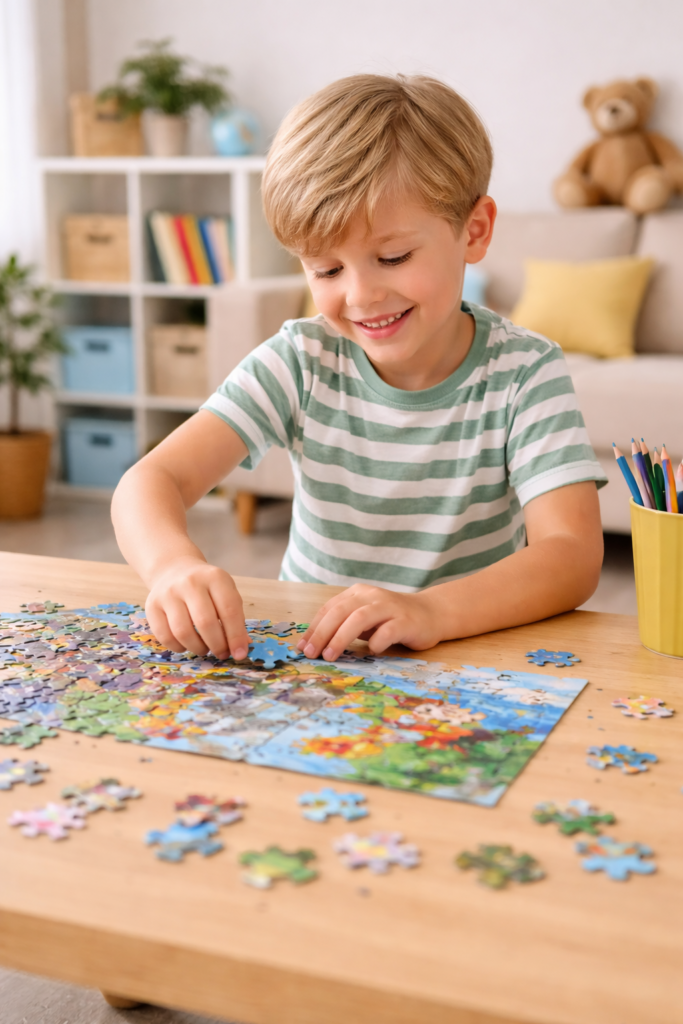
What is it: Puzzle solving is the logical arrangement of pieces, information, or clues to overcome a challenge and reach a definitive, intended solution. (Encyclopedia Britannica +1)
Examples include:
- Jigsaw puzzles
- Tangrams
- Maze worksheets
- Building blocks
Try This: Make a puzzle of your own:
Take a picture from an old calender.
Draw the pattern for puzzle pieces at the back side of the picture. Draw simple geometric shapes like sqaures or triangles for an easier puzzle. Draw smaller, more complex and wiggly interlocking shapes for harder one.
Cut and save the pieces in a ziploc bag or a small box. You can also tape a tiny version of the picture on it.
I made a car puzzle and a horse puzzle using the same way.
Why it works:
Puzzles stimulate the prefrontal cortex, which is responsible for: Logical thinking, Planning and Decision-making
Start with age-appropriate puzzles and slowly increase difficulty.
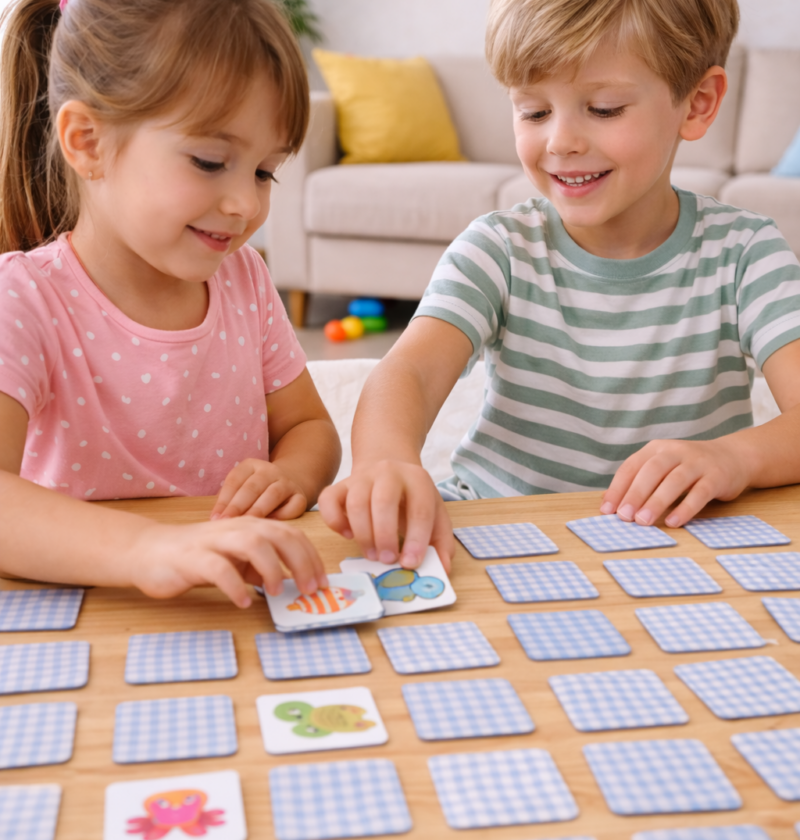
5- Memory Card Matching Game
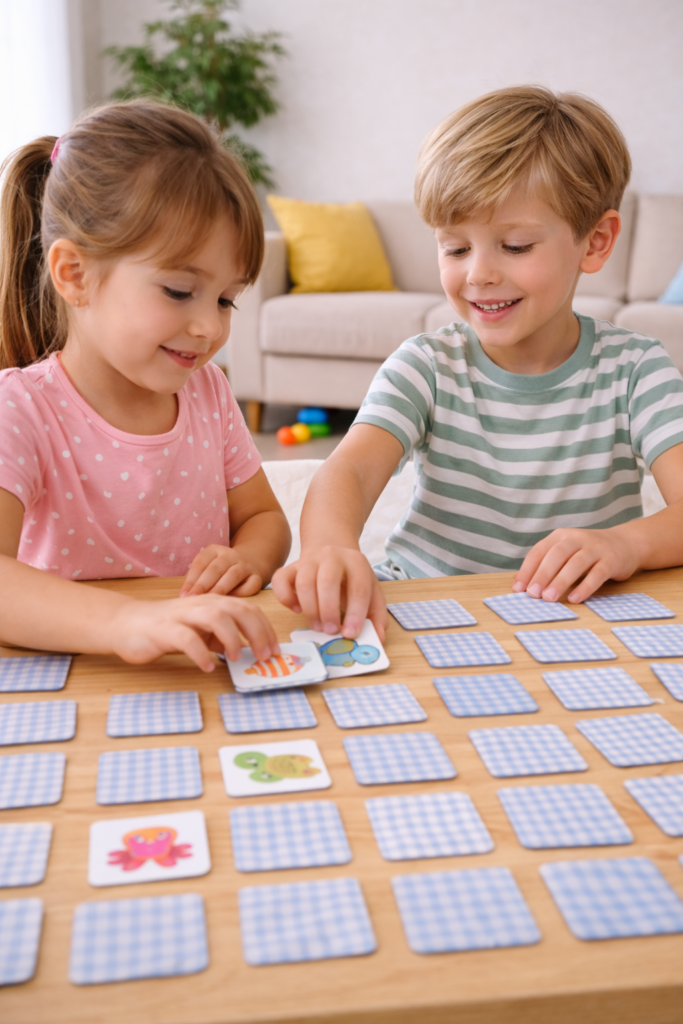
What it is: A classic card-flipping game where kids find matching pairs.
How to do it:
- Place cards face down.
- Flip two at a time.
- Try to remember their positions.
Why it works:
It strengthens: Working memory, Attention span and Visual processing skills.
You can even make DIY cards using animals, shapes, or sight words.
🌟A Word on Consistency
None of these activities need to be time-consuming or expensive to be effective. The brain grows through repetition and novelty — meaning regular, varied engagement with these exercises will yield far greater results than occasional marathon sessions. Think of these activities as daily nutrients for your child’s mind.
Consistency matters more than duration. Even 10–15 minutes daily can make a big difference.
The most important ingredient? Your presence and enthusiasm. When children see adults engage joyfully in learning and movement, they internalize the message that keeping their brain healthy is something worth caring about — a lesson that will serve them for a lifetime.
With love from Aalis Corner 💛
Simple Living, Shared with Love
This blog is intended for informational purposes only and does not replace the advice of a qualified healthcare or educational professional.